The Invisible Work Behind Better Traffic Decisions
Contributors
Jake LehmanCivil Engineer
Jack GepsonDesign Professional - Civil
Before a traffic study recommends a new turn lane, roundabout, pedestrian crossing, or signal improvement, transportation engineers have to answer a deceptively simple question:
What’s actually happening here?
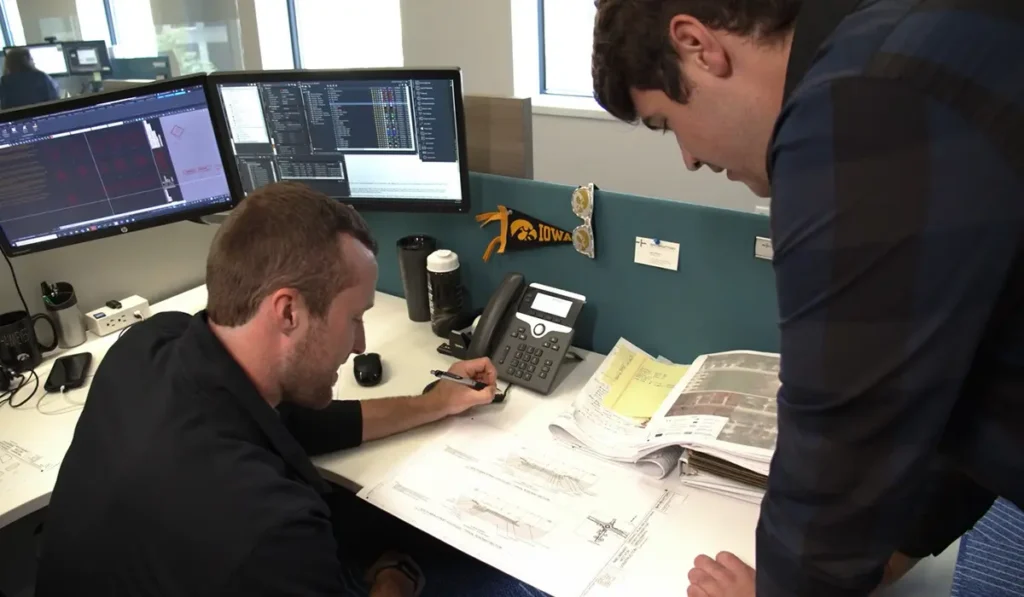
For transportation engineers Jake Lehman and Jack Gepson, that answer starts with traffic data collection. It’s often invisible work that underpins traffic impact studies, safety evaluations, and operational analyses.
We spoke with the pair about why accurate traffic data matters more than ever, how the industry is evolving, and what communities and project teams often misunderstand about the process.
Why is traffic data collection so important?
Jake Lehman: Traffic studies are built on assumptions about how people and vehicles move. The problem is that those assumptions are not always correct.
Our team is not just collecting numbers. We’re making sure the data reflects how a roadway or site is actually functioning today.
Traffic patterns change constantly when new developments open, school schedules shift, or industrial operations expand. Even the timing of data collection can influence a study’s outcome.
Have you ever had data completely challenge your assumptions?
Jack Gepson: Absolutely. One of the biggest lessons we’ve learned is that traffic doesn’t always behave the way people think it does.
There have been many instances where people who drive through an intersection every day are convinced it performs worse than it actually does. That’s not to say their concerns aren’t valid, but when we collect and analyze the data, sometimes the results tell a different story.
We’ve also seen situations where we expected most traffic to enter a site from one direction, only to discover that the majority was coming from another direction. Or we find that a different driveway than expected is handling most of the vehicles entering and exiting a development.
That’s why data collection is so important. It helps move the conversation from assumptions and perceptions to measurable facts. Sometimes the data confirms what everyone suspects. Other times, it completely changes our understanding of how a roadway, an intersection, or a site operates.
Sometimes the data disproves your assumptions and that’s exactly why collecting the right data matters.
What are engineers actually watching for during traffic data collection?
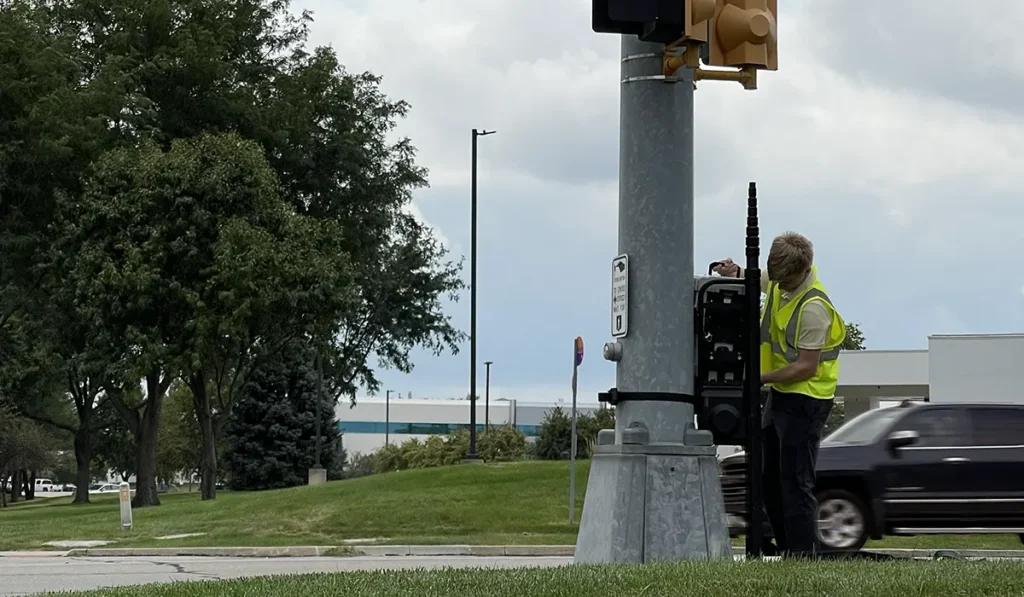
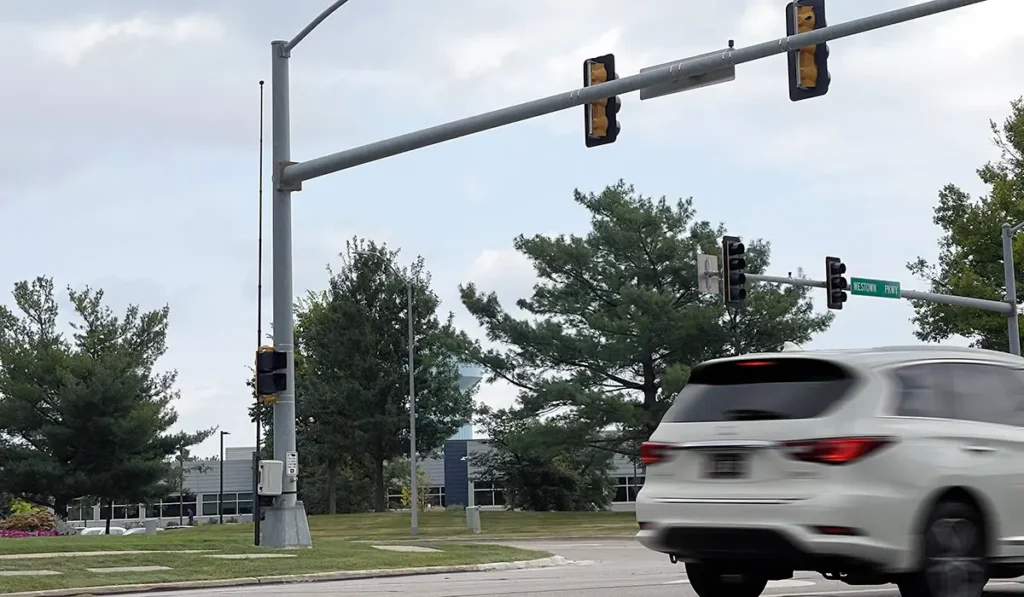
Lehman: Most people think traffic data collection means putting a camera at an intersection and counting vehicles. In reality, we’re studying behavior.
We’re watching how queues build during school drop-off periods, where pedestrians cross unexpectedly, whether trucks can maneuver safely through industrial sites, and how traffic patterns change throughout the day.
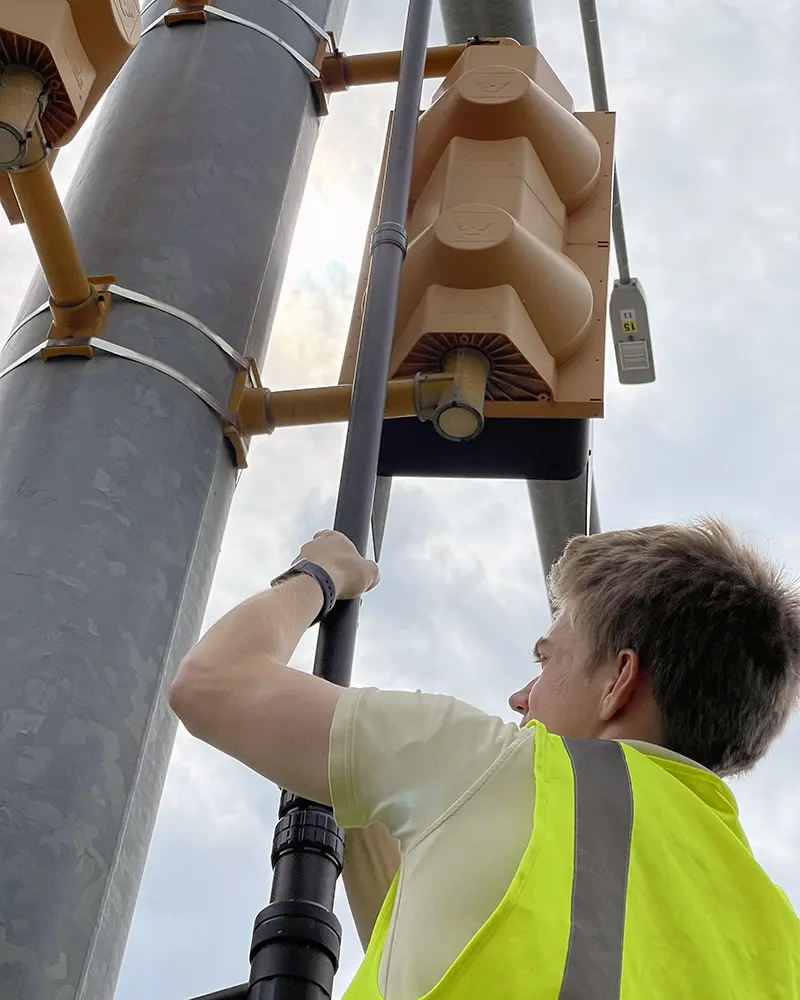
The cameras allow us to go back and manually review conditions if something in the data doesn’t look right.
Can you give an example of how cameras help beyond simple traffic counts?
Gepson: One example was a roundabout study near a school where there were concerns about interactions between students and vehicles.
The cameras helped us understand how traffic actually behaved during peak periods. Those are insights that traditional traffic counts alone would have missed.
People underestimate what an actual camera can do.
Is traffic data collection still mostly focused on intersections and roadways?
Lehman: Not anymore.
We’re increasingly using these tools to help organizations understand how entire sites operate.
For example, at a manufacturing campus in Ankeny, we analyzed internal circulation patterns involving tractors, forklifts, and other equipment moving between operational areas. The goal was operational understanding.
We’ve also used traffic data collection for:
Campus pedestrian movement
Industrial facility circulation
Before-and-after operational studies
The common thread is helping decision-makers better understand how their environments function day to day.
How is technology changing traffic data collection?
Lehman: The industry is evolving quickly. Connected vehicles, mobility datasets, and AI-powered analytics are all changing how transportation information is gathered and analyzed.
We’re learning those tools and embracing them where they make sense.
But engineering judgment still matters.
Gepson: A lot of the studies we do are in places that don’t even have traffic signals. There aren’t cameras already collecting this information.
In many communities, physical observation and video collection remain the most accurate and defensible methods for understanding traffic operations.
At the end of the day, we’re not trying to sell a product or a specific technology. We’re trying to solve the problem.
What’s one thing communities and project teams should understand about traffic data collection?
Gepson: It’s easier to collect too much data than too little.
Trying to minimize data collection too aggressively upfront can create much larger problems later, including delays, redesigns, additional costs, or missed operational issues.
If there’s even a chance you may need additional data later, it’s usually worth collecting it while you’re already there.
Final Thoughts
Traffic data collection may happen behind the scenes, but it plays a critical role in shaping infrastructure decisions.
Because ultimately, traffic studies are about more than numbers.