
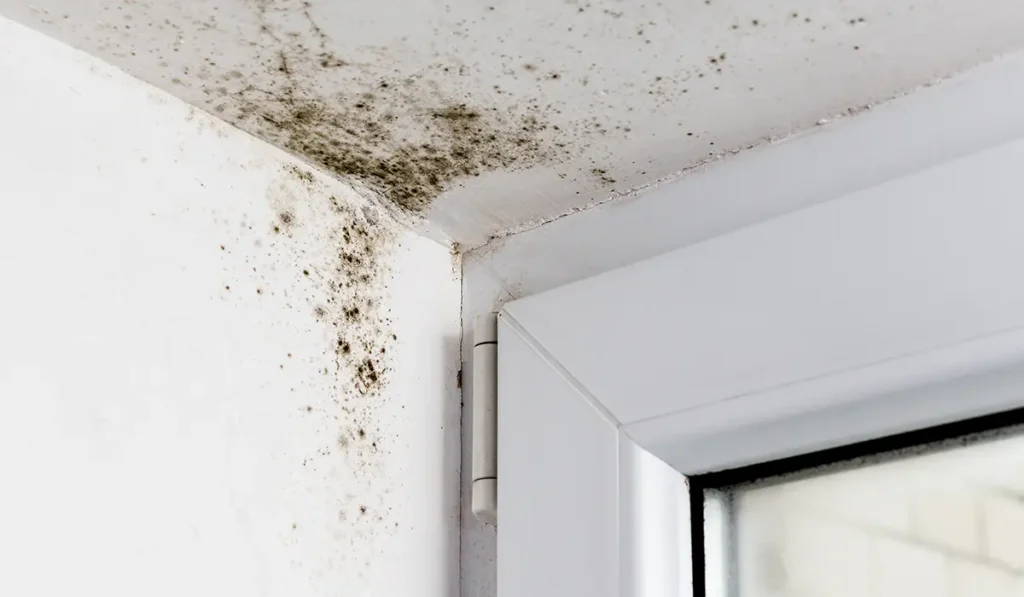
Mold is one of the most common and most misunderstood challenges facing campus facilities teams today.
It rarely appears overnight.
Instead, it develops quietly, driven by moisture, air movement, and building performance issues that often go unnoticed until they disrupt operations or impact occupant health.
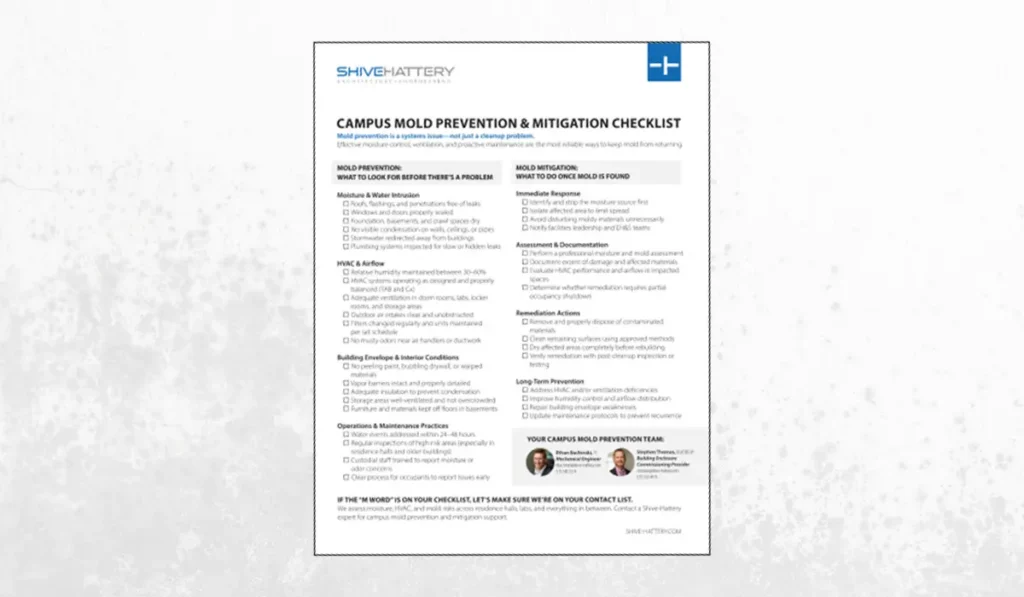
Get the Campus Mold Prevention & Mitigation Checklist
This quick-reference guide that helps facilities teams:
- Identify early warning signs of mold risk
- Evaluate common problem areas in buildings
- Take proactive steps to reduce moisture and improve indoor conditions
Understanding the Root Cause
Mold growth is more than a maintenance issue. It’s a building systems issue.
When moisture accumulates indoors, mold can quickly follow, damaging materials and creating potential health concerns if the underlying cause isn’t addressed.
The key conditions that allow mold to develop — typically within 24–48 hours under the right combination of moisture, temperature, and organic materials — are often tied to:
- HVAC performance and humidity control
- Building envelope deficiencies and air infiltration
- Operational and occupant-driven factors
By understanding how these systems interact, facilities teams can move beyond surface-level fixes and begin addressing the real drivers of mold risk.

Start a Conversation
If you’re evaluating a current concern or looking to take a more proactive approach to indoor environmental quality, our team is always available to connect.
