
As a healthcare interior designer, Allie Schutt has spent years studying industry guidelines, attending conferences, and exploring evidence-based design. She has participated in user group meetings, reviewed workflows, and developed plans for new clinics and hospital suites. Yet one of the most impactful learning experiences of her career did not come from a book, conference, or project team. It came through mentorship.
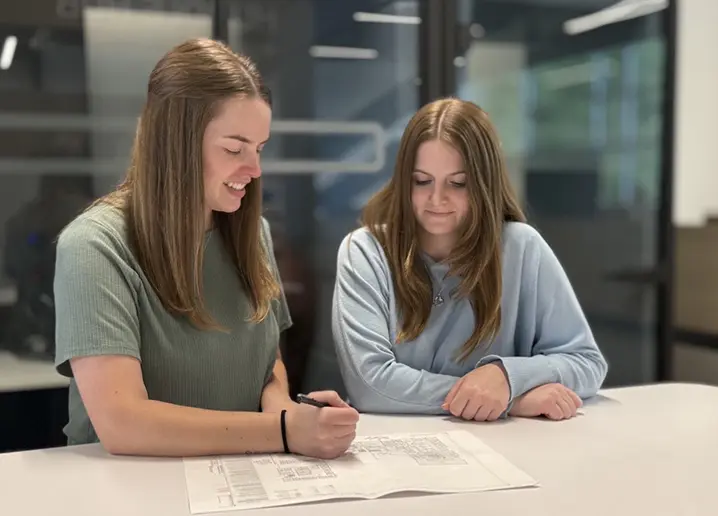
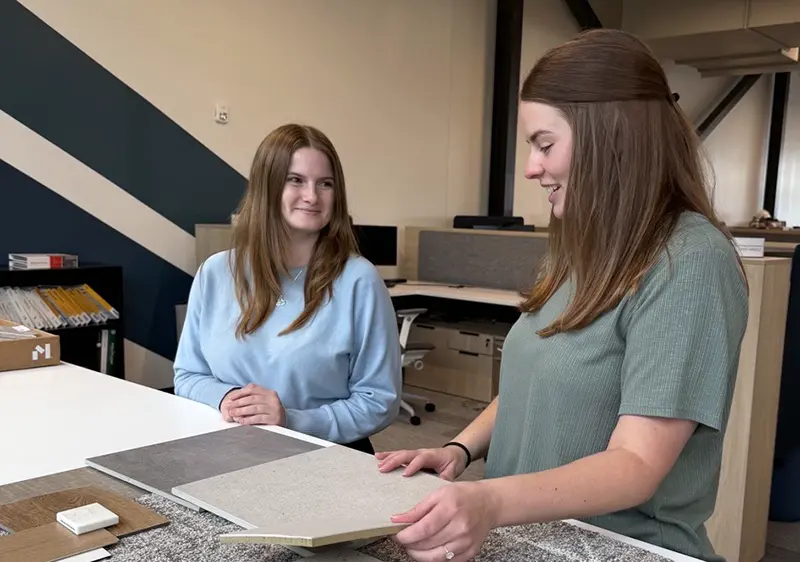
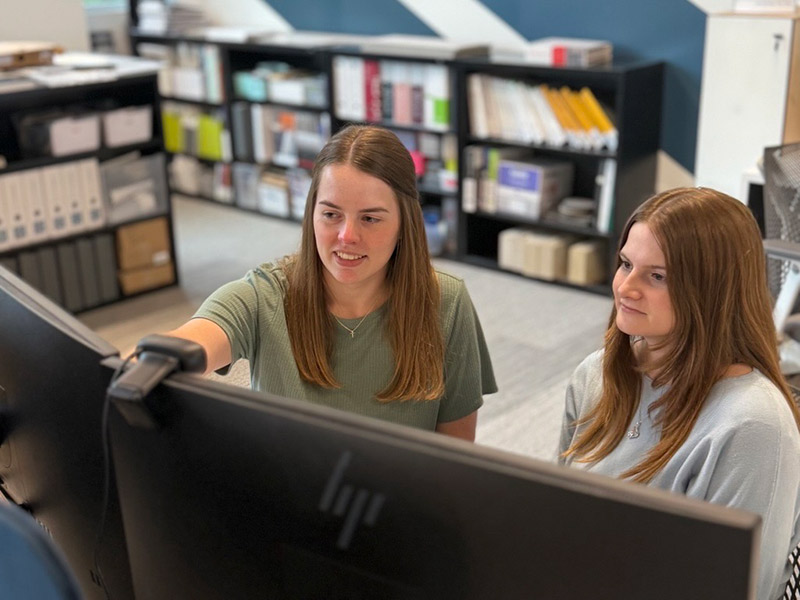
Allie Schutt mentoring recent graduate, Katelyn Drey
THE PAIRING
For the past 15 years, the International Interior Design Association (IIDA) has facilitated a student mentoring program that pairs aspiring designers with industry professionals based on their career goals. Driven by a passion for developing future designers, Schutt joined the program in 2025. This year, she was paired with an interior design student whose path into the profession differed from most emerging designers.
Before pursuing interior design, the student spent decades working in healthcare as a labor and delivery nurse and director of women’s services, followed by more than 10 years in healthcare IT. While the program positioned Schutt as the mentor, the relationship quickly became a two-way exchange of knowledge and perspective.
THE MENTEE
What Schutt’s mentee brings to the conversation is something many designers never have the opportunity to gain firsthand: lived experience inside the spaces they design.
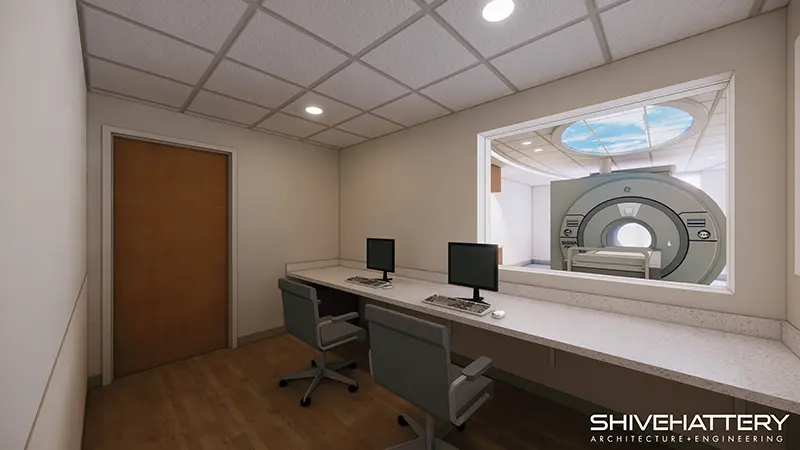
The mentee’s perspective is shaped by years spent working within healthcare environments rather than simply planning them. She is deeply aware of the emotional and operational realities those spaces support every day.
Through their conversations, Schutt gained new insight into how staff experience healthcare environments. Staff lounges tucked into windowless corners and treated as afterthoughts are not simply design shortcomings; they communicate whose well-being is prioritized and whose is overlooked.
One of the most striking observations the mentee shared was that clinicians often recognize when something is not working but may struggle to articulate exactly what they need. Designers, meanwhile, may assume they already understand the problem.
Curious about how those experiences would shape the student’s future in design, Schutt asked how her nursing background would influence her approach. The response was straightforward: “I understand their language, the equipment, and how it’s used.” The student also spoke about knowing how many steps it takes to reach a supply room, how equipment frequently ends up in inconvenient locations when omitted from planning discussions, and how staff routinely adapt to spaces that were never designed around the realities of their work.
Her perspective reframes the designer’s role. Rather than serving as the expert with all the answers, designers become interpreters: continuously asking questions, testing assumptions, and translating lived experience into the built environment.
ROLE REVERSAL
Somewhere during these conversations, the traditional mentor-mentee dynamic began to shift.
The experience challenged Schutt to rethink aspects of her own design process. It encouraged her to ask questions earlier, study adjacencies more closely, and look more critically at storage, visibility, and circulation patterns. It also reinforced the importance of advocating for staff respite spaces, access to daylight, and opportunities to support employee well-being.
Effective mentorship is not solely about guiding someone else’s growth. At its best, it creates space for perspectives that challenge established thinking and inspire new approaches. When nurses, clinicians, IT professionals, and other healthcare stakeholders are welcomed into design conversations as true collaborators, the result is healthcare environments that are more humane, functional, and resilient.
About the Contributor

Allie is a dedicated healthcare interior designer who brings steady, reliable energy to every project—making the design process low stress for clients and seamless for project teams. She has a sharp eye for patient and staff flow, ensuring layouts not only look good but function effortlessly in real-world healthcare settings.
Allie Schutt. NCIDQ
Registered Interior Designer
“If we want healthcare spaces to truly support care, we need to learn from those who live in them every day.”
- Allie Schutt, Interior Designer
Share

Related