
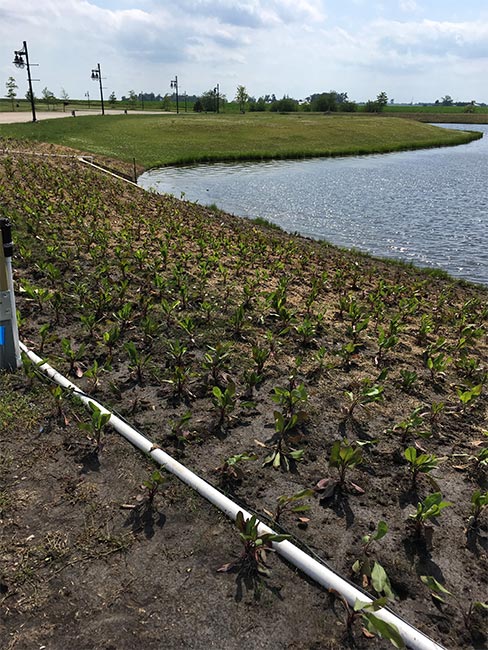
Environmental planning and permitting play a critical role in protecting water resources and minimizing environmental impacts associated with development and facility operations. Identifying the appropriate permits and plans early in a project lifecycle is essential—missing or incomplete approvals can lead to enforcement actions, fines, or costly schedule delays.
Shive Hattery partners with public and private clients to navigate complex environmental regulations, coordinate with regulatory agencies, and develop practical, defensible permits and plans that support efficient project delivery.
Section 401 / 404 Permitting
Projects that impact wetlands, streams, lakes, or other aquatic resources may require authorization under Sections 401 and 404 of the Clean Water Act. These permits are administered by the U.S. Army Corps of Engineers, with state agency coordination to address water quality requirements.
Early identification of jurisdictional waters and permit applicability is key to avoiding unexpected delays and design changes.
Shive Hattery supports clients throughout the permitting process, including:
- Jurisdictional evaluations and delineations
- Coordination with federal, state, and local agencies
- Preparation of permit applications at the appropriate stage of design
- Support with mitigation planning and approval pathways
Our team focuses on practical, project-specific solutions that maintain regulatory compliance while keeping schedules on track.
Floodplain Permitting
Development within or near regulated floodplains or waterways may require floodplain development permits and supporting technical analyses. These requirements are intended to preserve flood conveyance, reduce flood risk, and ensure compliance with local, state, and federal floodplain regulations.
Shive Hattery provides floodplain services that support both planning and permitting efforts, including:
- Hydrologic and hydraulic analyses
- Floodplain modeling and mapping
- No-rise certifications
- Bridge and culvert sizing and evaluation
By integrating floodplain considerations early in the design process, we help clients minimize permitting challenges and reduce impacts to surrounding properties and infrastructure.
National Pollutant Discharge Elimination System (NPDES) Permitting
The National Pollutant Discharge Elimination System (NPDES), established under the Clean Water Act, regulates point source discharges of pollutants to Waters of the United States (WOTUS).
NPDES permit coverage is commonly required for:
- Construction activities that disturb one acre or more of land, or that are part of a larger common plan of development
- Industrial activities that discharge stormwater alone or in combination with authorized non-stormwater discharges
Shive Hattery assists clients with NPDES permitting by preparing required documentation, coordinating permit submittals, and supporting compliance throughout construction and operations. Early coordination and proper permitting help reduce enforcement risk and keep projects moving forward.
Stormwater Pollution Prevention Plans (SWPPP) Design
Stormwater Pollution Prevention Plans (SWPPPs) are required for construction and industrial activities regulated under the NPDES program. SWPPPs are designed to minimize erosion, sediment transport, and pollutant discharges in stormwater runoff.
A well-developed SWPPP identifies potential sources of pollution and outlines best management practices (BMPs) to protect receiving waters before, during, and after construction.
Shive Hattery provides comprehensive SWPPP services, including:
- SWPPP preparation and design
- Plan and specification development
- Permit submittal support and updates
Maintaining a current and effective SWPPP helps reduce the risk of violations, project delays, and costly corrective actions.
Spill Prevention, Control, and Countermeasure (SPCC)
Spill Prevention, Control, and Countermeasure (SPCC) plans are required for facilities that store significant quantities of oil or petroleum products and have the potential to discharge those materials into Waters of the United States (WOTUS). SPCC applicability is common among public entities, utilities, and industrial facilities, and determining applicability can be complex.
Shive Hattery conducts site evaluations to identify oil storage locations, transfer areas, and potential spill pathways, and develops SPCC plans tailored to site-specific conditions.
Plans typically address:
- Spill prevention and control measures
- Secondary containment requirements
- Inspection, testing, and maintenance procedures
- Spill response and reporting actions
A compliant SPCC plan helps facilities reduce environmental risk, limit regulatory exposure, and demonstrate a commitment to safety and environmental stewardship.
Why Shive-Hattery
Environmental permitting is most effective when it is integrated early and coordinated across disciplines. Shive Hattery offers a collaborative, practical approach that helps clients manage regulatory requirements while advancing project goals.
Clients choose Shive Hattery because we provide:
- Integrated expertise across environmental, civil, water resources, and infrastructure disciplines
- Early coordination with regulators to identify risks and streamline approvals
- Practical, defensible solutions tailored to project-specific conditions
- Proven experience supporting public agencies, utilities, developers, and industrial clients
- A proactive approach focused on reducing permitting risk and schedule impacts
By combining technical depth with responsive service, Shive Hattery helps clients move projects forward with confidence. Contact us today for help with your environmental planning and permitting.

More Environmental Services Projects
Creating the foundations that support community growth.
We're Learning, Growing + Sharing
Stay on top of the latest industry trends as we share how we are staying ahead of them.

Before You Sign: The Second-Gen Office Space Checklist
Commercial

What Mentoring a Nurse Taught a Healthcare Designer About Better Design
Healthcare
Building for Where Care is Going
Healthcare