“Test-Fit” Ideas to save time, money, and better align stakeholders
Contributors
Michelle HugginsPlanning and Design Manager, Drake University
Paul RathjenArchitect
Holly ReidLandscape Architect
James WalbridgeHigher Education Buildings Market Leader
New projects start with an idea—the need for more space, a program expansion, or a facility update.
Before you design concepts, there is the “project before the project.” This initial step is where clarity replaces confusion, confidence replaces hesitation, and viable paths forward come into focus.
Clients often ask, “Where do we begin? Who should be in the room? How do we know what’s possible?”
At the earliest stage, your “idea generator” and key decision partner (e.g., president, director, board member, etc.) meet with a facilitator to explore the project idea without pressure or politics. This “test-fit” surfaces concerns or constraints people may not feel comfortable voicing in a larger setting.
A “test-fit” is a working session, often just one or two meetings, where you explore what is possible. It is not a master plan or a commitment. It is the fastest, clearest way to understand whether your idea has “proof of life.” Put simply, determine whether your idea can work before you spend months refining it.
Instead of asking for your full vision, break down the three essentials of any successful project:
Scope: What problem are you trying to solve?
Schedule: When do you need to get there?
Budget: What resources do you have today, and what might be possible tomorrow?
Clients often feel immediate relief in this stage because they finally see the whole picture at once.
Drake University Planning and Design Manager, Michelle Huggins, has noticed these changes in the industry and, as a Shive-Hattery industry resource, she has helped owners with decision-making at critical points.
“There shouldn’t be a mystery around the steps,” says Michelle. “The Test Fit is a fun sprint. If you have the right experts at the table, the basics of your project proforma come together quickly.”
What You Can Expect from a Test‑Fit Session
In these collaborative sessions, you discover answers to questions that typically drag on for months:
What are our non-negotiables?
What can we afford today, and how might we phase the rest?
What approvals might slow us down?
What delivery methods fit our timeline and risk tolerance?
Who else needs to be involved, and when?
Is our idea viable, or do we need to rethink it?
You leave with a mapped out scope, schedule, and budget—along with clear next steps and the confidence to take them.
This is not about perfecting concepts. It’s about creating a stable structure you can build on. As James Walbridge, Shive-Hattery Higher Education Buildings Market Leader, described it, “If you can’t get the chorus right, the song won’t work. The test fit is the chorus.”
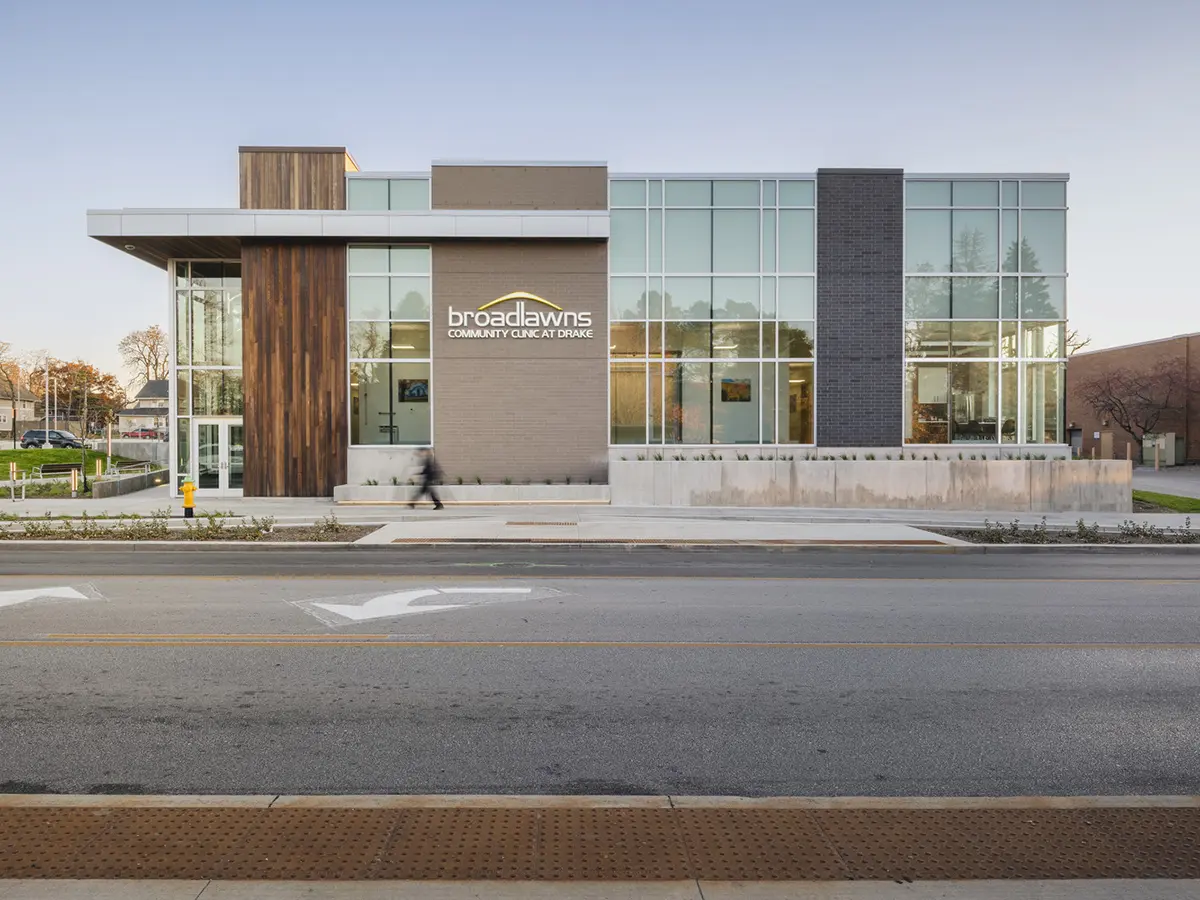
The 12,000-square-foot clinic has become a vibrant hub of activity, expanding access to care while supporting daily life for students, staff, and the surrounding community.
Add Operational & Financial Voices
Most organizations assume they must gather a full committee or assemble their entire leadership team before having a project conversation. In truth, starting that way slows momentum and heightens politics.
Instead, begin with one or two key decision-makers who are willing to speak candidly about constraints, priorities, fears, and hopes. This private, judgment free start helps uncover the real blockers, such as approval processes, internal dynamics, or misunderstood assumptions.
From there, we help you gradually expand the circle—bringing in the finance lead, fundraising lead, operations lead, or others—only when the time is right. This builds internal confidence step by step. Each new person enters a clearer, more focused conversation rather than a fog of unknowns.
This stage helps refine feasibility, identify operational impacts, understand fundraising potential, and prepare for communicating the idea beyond the leadership circle. As Holly Reid, Higher Education Landscape Architect Studio Leader at Shive-Hattery, notes, this early work “gives clients confidence to move forward because they finally understand what is achievable on day one and what can be phased over time.”
Align with Governance and Approval Bodies
When the test-fit has a clear direction—scope, timeline, and budget that feel grounded, organizational governance should enter the conversation. Roles in this stage often include board president or board committee members, trustees, executive cabinet members, advisory groups, etc.
The goal here is alignment, not design. Governance leaders want to know whether the idea is viable, responsible, and mission‑aligned before they invest energy or resources into it. For example, a college may present the completed test‑fit outline to the Board of Trustees before sharing it with a larger public audience.
This step ensures your oversight body has clarity, confidence, and ownership before you move toward design.
Bring the Wider Community into the Conversation
After leadership and governance alignment, the test-fit story is ready to be shared broadly. This could include faculty, staff, organizational teams, community stakeholders, donors, students or program participants, partner agencies, media, or public audiences.
This is where momentum builds. Stakeholders see possibilities clearly and respond with support, questions, or enthusiasm. Because the idea has already been vetted, these conversations feel energizing instead of chaotic. Your project concept is shared with a larger public audience only after the governing authority has understood and supported the proposed direction.
Designed to anchor a citywide network of support, the Gregory & Suzie Glazer Burt Boys and Girls Clubempowers youth with a reliable place to learn, grow, and connect beyond the school day.
Is Project Test-Fit Planning a Good Match for You?
Projects often falter not because of design challenges, but because fundamental questions aren’t answered early enough. For example:
The organization hasn’t agreed on why the project matters.
Leaders don’t know how much funding they truly have.
Teams jump into floor plans before deciding whether the project is even viable.
Early ideas become promises before anyone tests whether they can be delivered.
Politics or fear keep people from voicing concerns until it’s too late.
As Paul Rathjen, Shive-Hattery Higher Education West Studio Leader, puts it, “The biggest mistake is doing a bunch of planning no one can afford. People get upset when they can’t deliver what they showed early on.”
The test‑fit process interrupts this pattern with radical clarity. Clients regularly say, “We’ve spent a year and a half doing the opposite of this. Is it too late to fix it?” The answer is always yes—you can fix it. You just must stop, zoom out, and reset your path.
Do you have a new building idea or a remodel need, and you are stuck on where to start?
Do you have the project information but don’t know how to organize it, or who to contact first?
Do you have a plan that is over budget?
Do you want to learn how to mitigate risk in developing capital projects?
If you have answered “yes” to any of these questions, a project test-fit is a good option to consider.
Why This Matters Now
Capital projects are major investments—not only financially, but in time, emotion, and organizational energy. Your team deserves a start that feels grounded instead of overwhelming. A process that brings clarity instead of confusion. A guide who helps you move forward without rushing you into decisions.
When you rethink the beginning of your project journey, everything that follows becomes more manageable, predictable, and aligned. Instead of guessing, you make informed decisions. Instead of jumping to drawings, you build a foundation. Instead of reacting to crises, you navigate with intention.
Most importantly, you gain a trusted partner who listens first, plans alongside you, and helps you avoid the pitfalls that too many organizations experience.
If you have a project idea beginning to take shape—or if you’ve already started down a path and worry it might not be the right one—you don’t have to figure it out alone. You simply need the right first conversation.
About the Contributors
Michelle Huggins Drake University
Michelle Huggins is the Planning and Design Manager at Drake University. She plays a key role in shaping Drake’s built environment, refining the Test Fit process through the delivery of $185M in small and capital projects at Drake and across other higher education institutions through Shared Services. Prior to joining Drake, Michelle has 20+ years of experience as a consultant architect providing valuable perspective in guiding design teams and delivering projects that support academic and campus goals.
Paul Rathjen Architect
Paul Rathjen leads the Shive-Hattery Higher Education West Studio. He is an architect with 25+ years of experience. Paul advances studio performance and business outcomes, drives design and operational excellence, and mentors staff.
Holly Reid Landscape Architect
Holly Reid is the Higher Education Landscape Architect Studio leader at Shive-Hattery. She is a landscape architect with 20+ years of experience. Holly drives both people and business growth, leads high-quality project delivery, and fosters employee development.
James Walbridge Higher Education Buildings Market Leader
James Walbridge is the Higher Education Buildings market leader at Shive-Hattery. With 30+ years of experience, he guides the overall performance of this market through strategic planning and partnerships, employee management, development and engagement, business development and project delivery.
Contributors
Michelle HugginsPlanning and Design Manager, Drake University
Paul RathjenArchitect
Holly ReidLandscape Architect
James WalbridgeHigher Education Buildings Market Leader